

Estonia Latvia Lithuania
Philately
Our Passion
Arbeitsgemeinschaft
Baltikum e.V.
im BDPh e.V.

Stamps
Documents
Postmarks
Everything the collector's
heart desires
Exhibit
Research
Publish
Everyone for themselves
and all
together
The Collectors of Baltic Philately in Central Europe
Emerged from: Arbeitsgemeinschaft Estland e.V. + Forschungsgemeinschaft Lettland + Forschungsgemeinschaft Litauen e.V. + Nederlandse Filatelistengroep "Het Baltische Gebied"
65. monthly video chat
At the start of this video discussion, the focus was on the fact that the Michel Postage Rates Handbook for Germany, in its 3rd edition (2015) – which is still currently in use – apparently does not always give the correct rates for the post–war period 1945–1949. In cases of doubt, the information should be checked against other literature or sources.
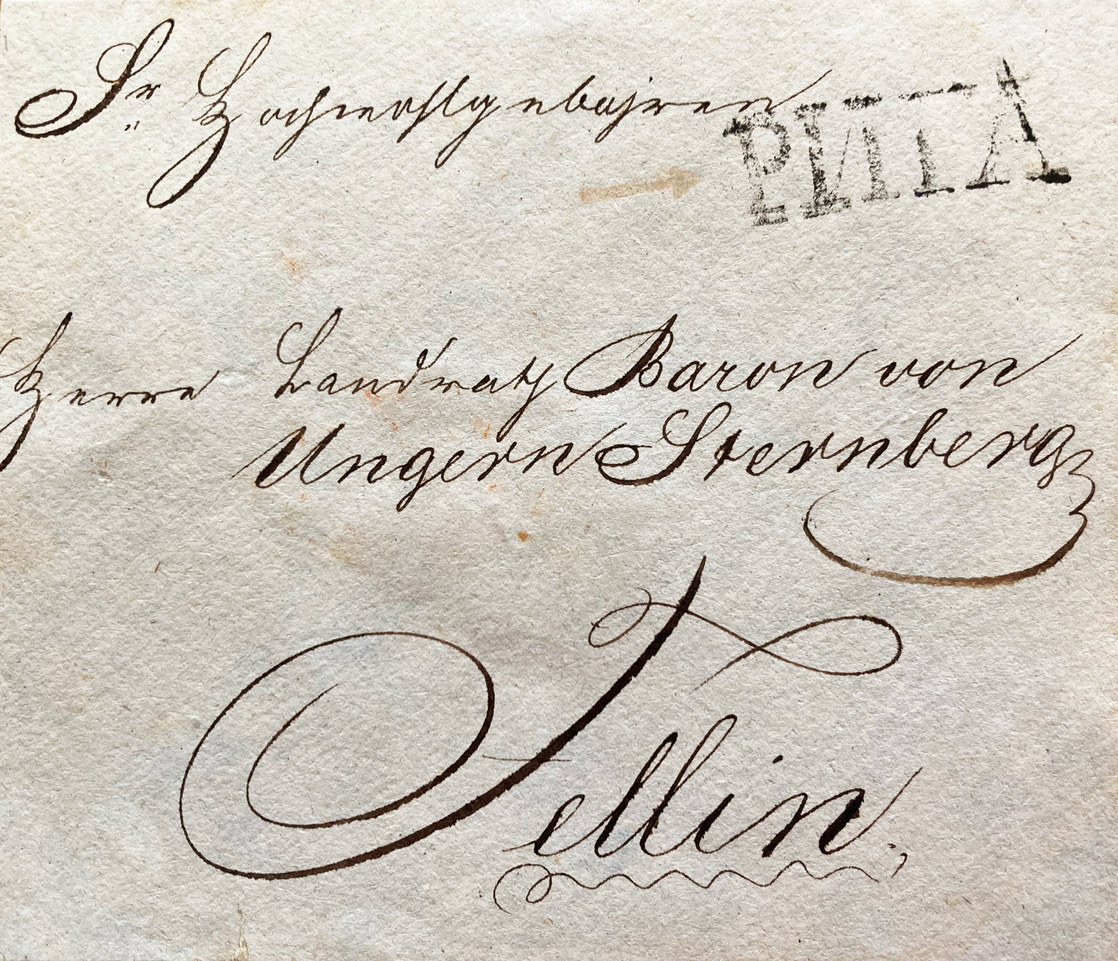
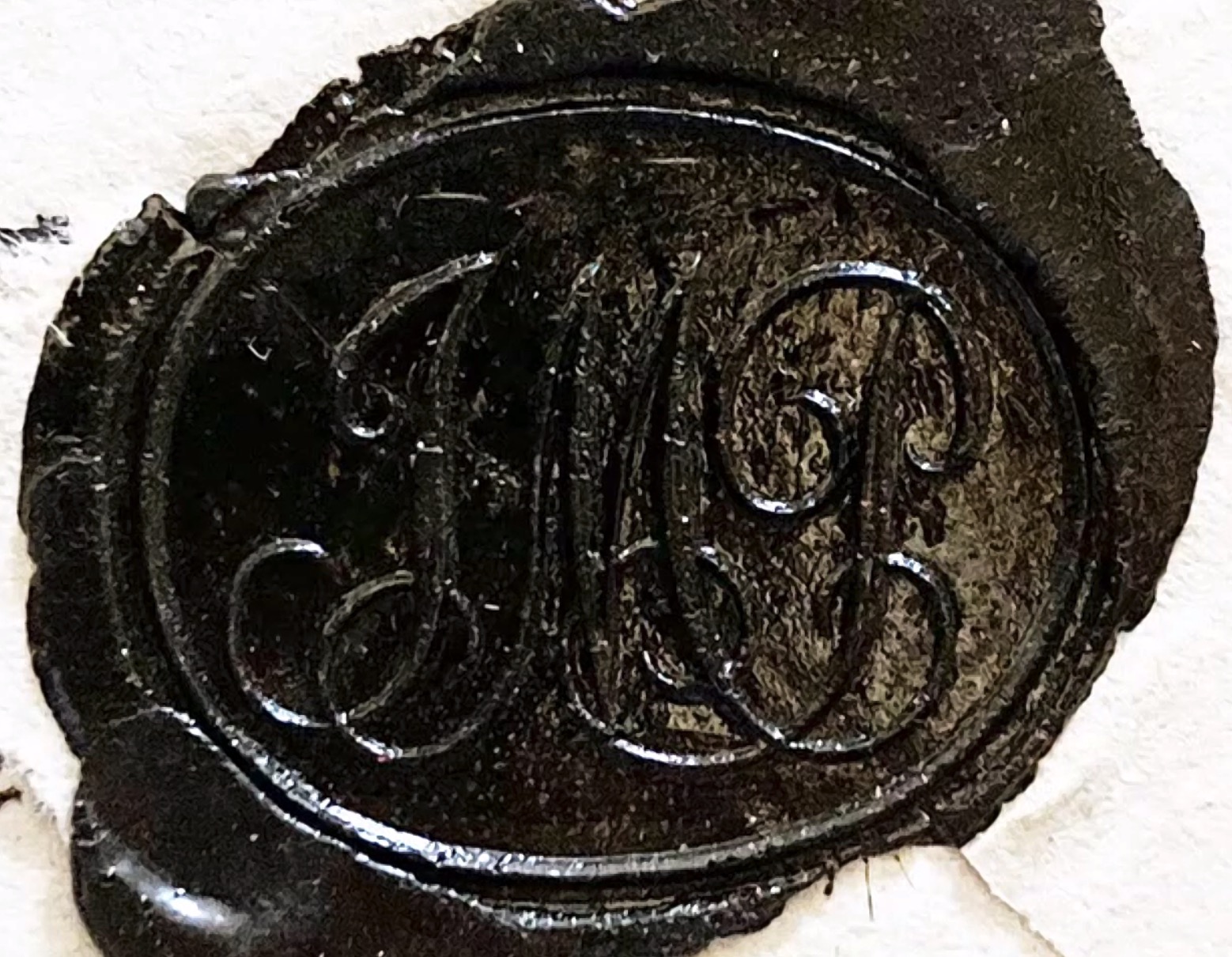
Following a few holiday stories, some new acquisitions were presented. Among other things, Olaf Hoffmann showed the two documents pictured here:
A pre-philatelic letter from Rīga (now in Latvia) to Fellin (now Viljandi in Estonia) dated 1813 – both places being part of the Russian Empire at the time – bears not only a line postmark indicating the postage but, on the reverse, also a very fine seal featuring intertwined letters, presumably the sender's initials.
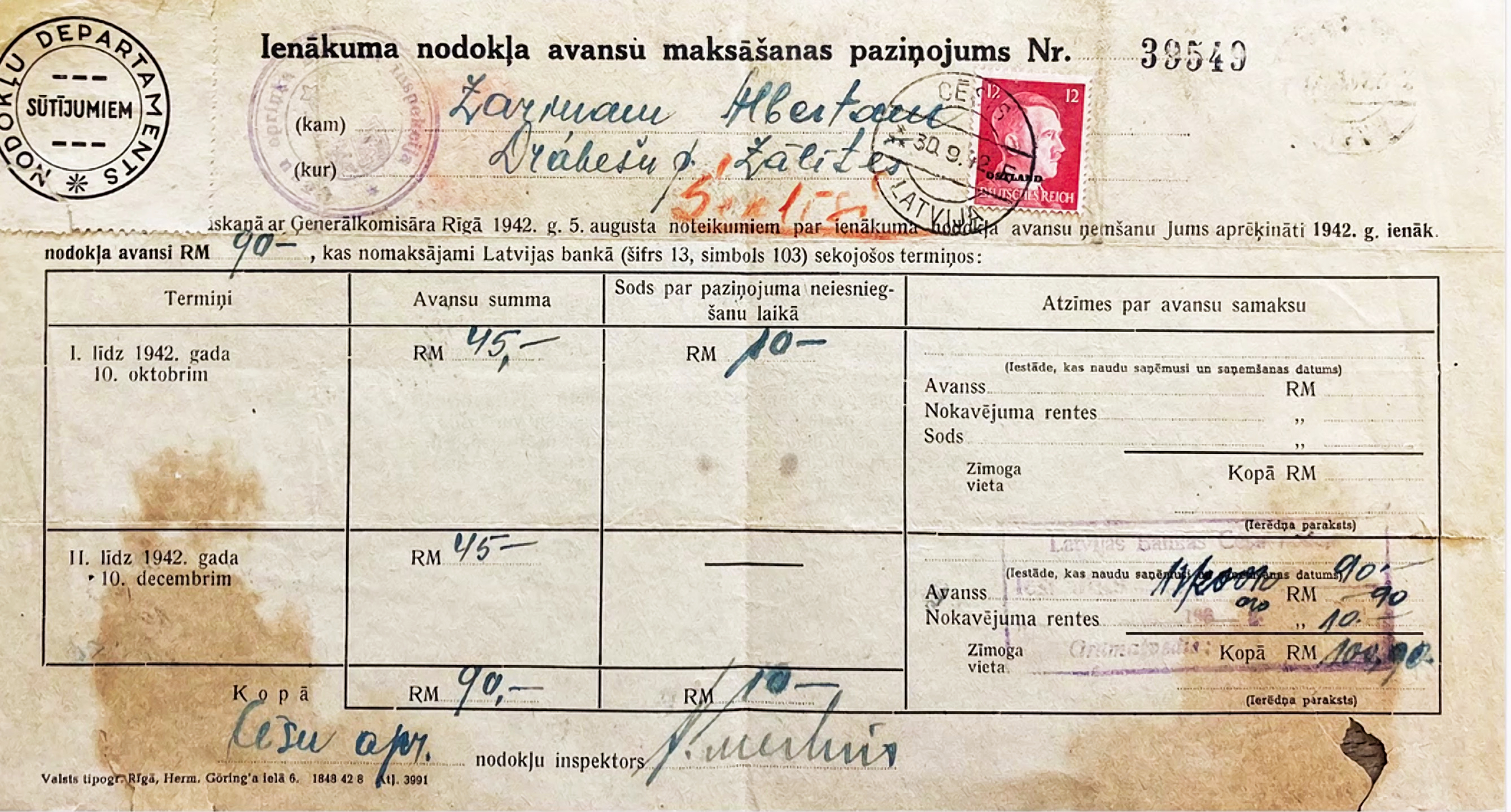
The payment receipt shown below is a fine example of an Ostland overprinted stamp being used as postage stamp on September 30, 1942, in Cēsis / Wenden (the letter was folded so that the address and the stamp formed the front).
Shown here is an income tax prepayment notice, No. 38549, issued by the relevant tax inspector on a form printed by the State Printing Office in accordance with the regulations of the General Commissariat (of the German Reich) in Rīga dated August 5, 1942. The amount due for 1942 is 90,– Reichsmark (RM); 45,– RM is to be paid by October 10 and a further 45,– RM by December 10 (such deadlines still apply in Germany today).
The penalty for late payment is clearly stated in the second column: 10,– RM.
The amount was evidently not paid on time. The right-hand column confirms receipt of 90,– RM in tax plus a 10,– RM late payment surcharge, making a total of 100,– RM.
Our monthly video chat, where anyone with an interest in Baltic philately is welcome, takes place on every first Saturday of the month at 17 h CET (more technical information on this here).
Next date: October 3, 2026
Special theme: none so far
This email address is being protected from spambots. JavaScript must be activated in order for it to be displayed.Join the Zoom meeting with:
https://us02web.zoom.us/j/85338222428?pwd=WGpZRXJTZVpnSnB6eHg4Ukx2aFVHdz09
64. monthly video chat
Following presentations by participants on some of their new acquisitions, Thomas Löbbering reported on the meeting of European Estonia examiners in Finland, which included a number of internal presentations aimed at mutual professional development.
Jaan Roots announced there that he would be publishing a longer article on Estonian postal links with Europe in 1918–1919:
On December 12, 1918, two trains collided on the broad-gauge railway line between Tallinn and Tartu; shortly afterwards, rebels blew up a bridge. This cut off rail links from Tallinn to the south.
Post from places north of the disruption was transported to Germany by sea via the Finland– Sweden route – after lying in storage for up to several weeks in some cases.
South of the break, it was transferred via Walk/Valga to the Upper-East Administration, which operated until December 26, 1918 (closure of the Riga post office) and thereafter until January 2, 1919. After January 2, 1919, the post was stored in Tartu until the end of the Soviet occupation; it was then taken over by the Estonian Post Office. However, as civil war was raging in Latvia, also this post was initially routed via Finland and Sweden to Europe.
We can't wait to hear the details!
Michael Wienecke presented a number of items from Estonia that were carried on the Zeppelin trip to the 1933 World's Fair in Chicago. This was a triangular journey: Germany – South America – North America – Germany, as illustrated by the well-known triangular postmark. Only around 10 to 15 feed-in documents from Estonia relating to this Chicago journey are known to exist.
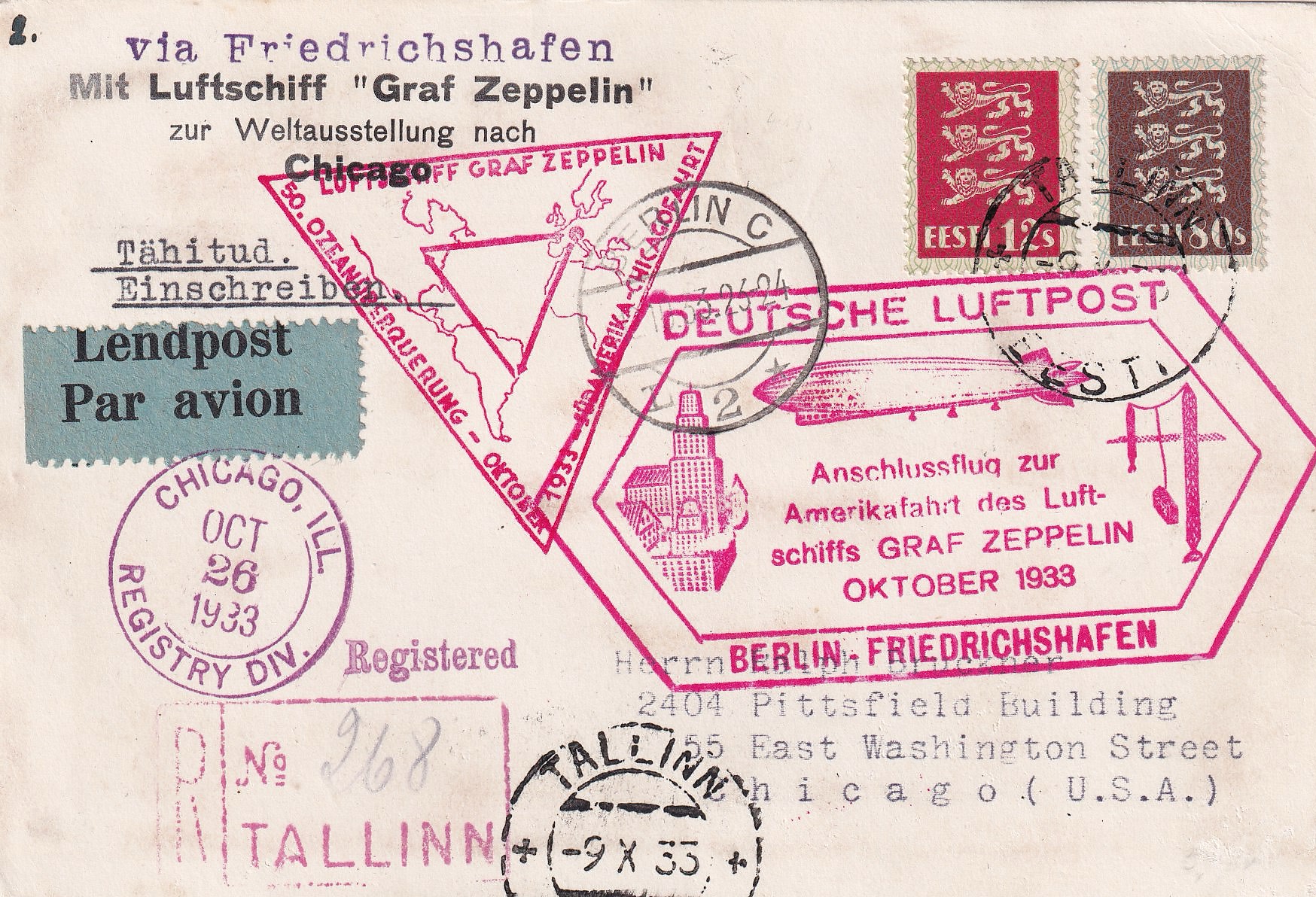
The document shown here is a registered postcard dated 9 X 33, sent by airmail via Berlin C on October 12, 1933 to Friedrichshafen and from there forwarded via the aforementioned route to Chicago – arriving on October 26, 1933.
As no specific Zeppelin postal charges had been defined prior to May 1, 1934, such items were usually franked as airmail, as is the case here: 12 senti for the international postcard, 20 senti for the registered post fee and 60 senti for the Zeppelin charge on postcards = 92 senti in total.
Our monthly video chat, where anyone with an interest in Baltic philately is welcome, takes place on every first Saturday of the month at 17 h CET more technical information on this here).
Next date: September 5, 2026
Special theme: none so far
This email address is being protected from spambots. JavaScript must be activated in order for it to be displayed.Join the Zoom meeting with:
https://us02web.zoom.us/j/85338222428?pwd=WGpZRXJTZVpnSnB6eHg4Ukx2aFVHdz09
bephila 2026
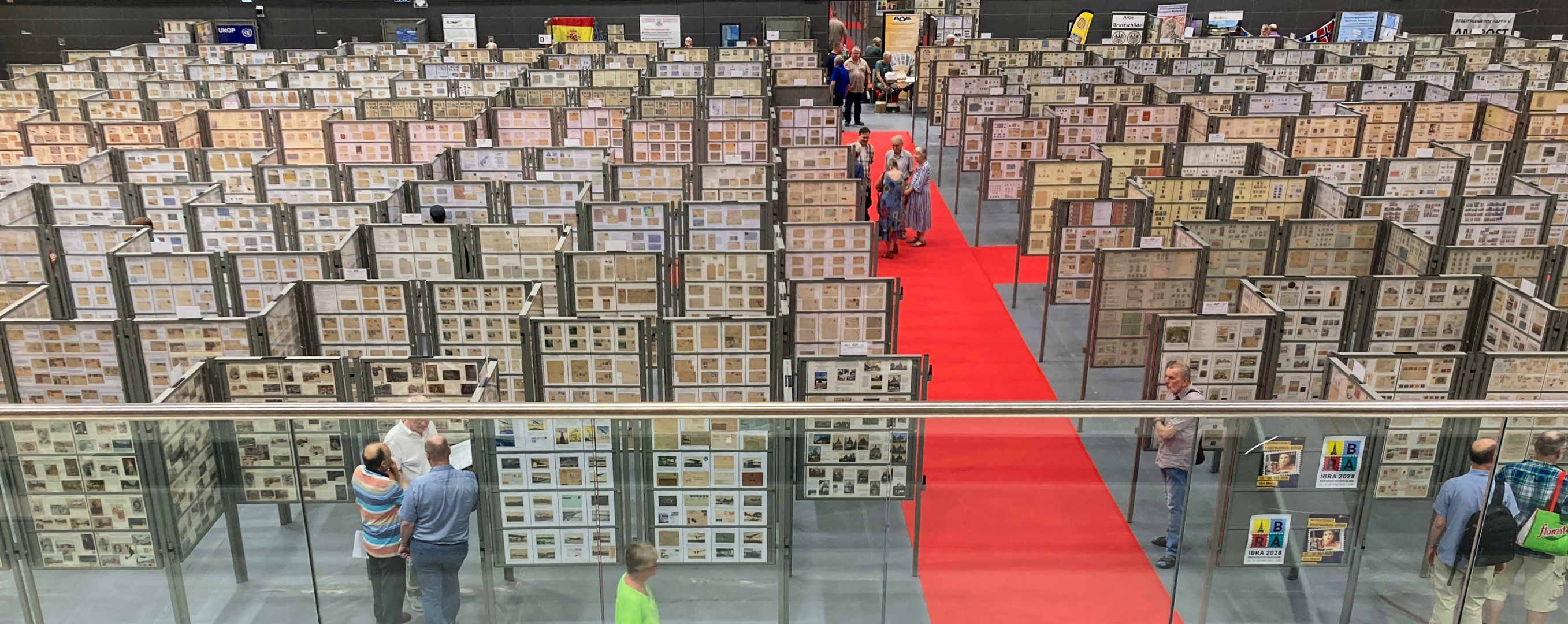
With an event that was a resounding success, the North-East Philatelists' Association, the Bernau Stamp Collectors' Club, the Berlin Research Society and the Berlin Post-Stamp Collectors' Association of 1901 made their mark on the annals of philately. Bephila in Bernau, a German-Swedish bilateral event, impressed with its diversity. This applied equally to the exhibition, the programme of talks, the participating dealers and the working groups. Consequently, it was not only visitors with an interest in Sweden who got their money's worth.
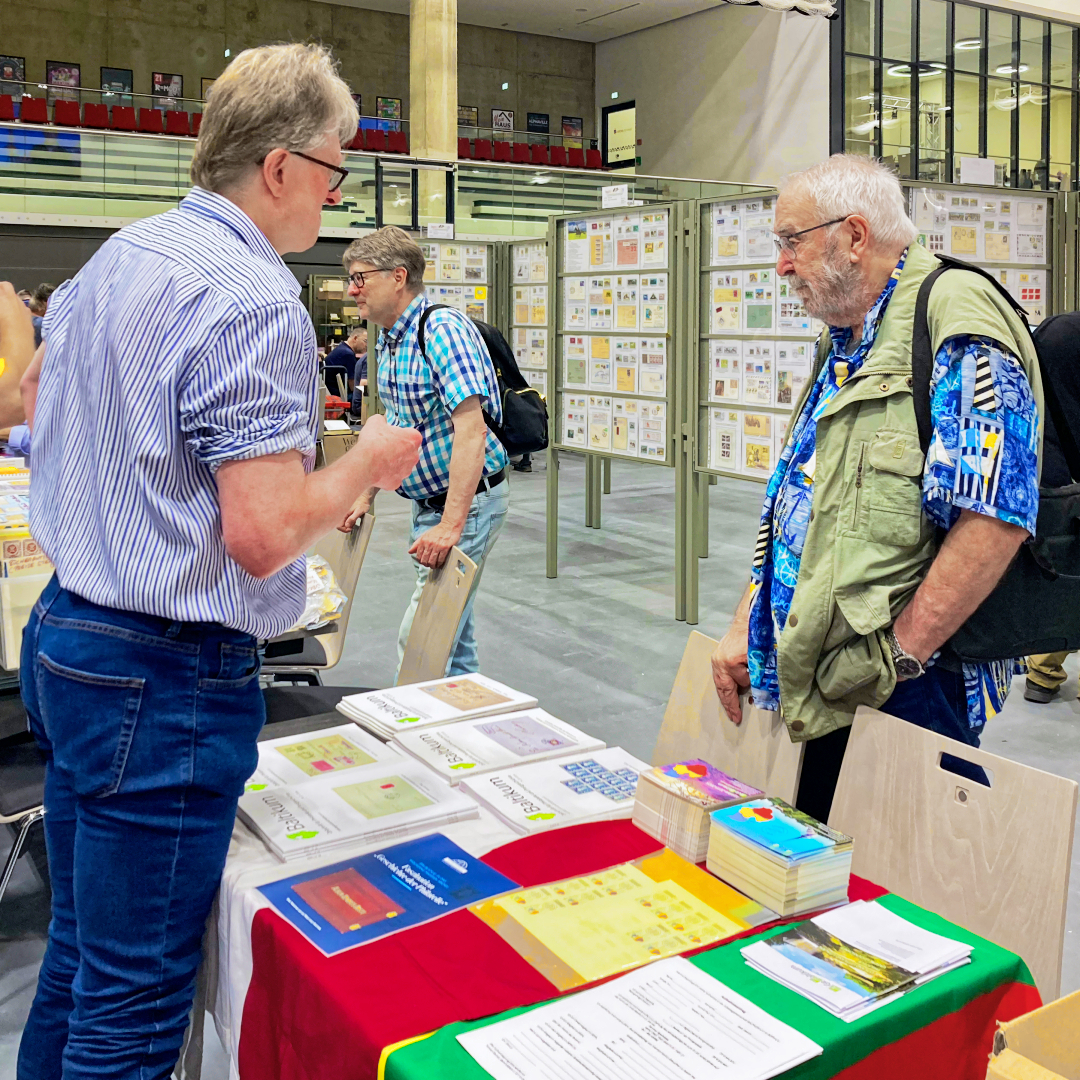
At the ArGe Baltikum stand, we were asked many questions about Baltic philately, particularly regarding the postal history of Russian rule over Estonia, Latvia and Lithuania. We handed out a few copies of our magazine BALTIKUM and hope that these contacts will endure. Of course, we also caught up with one or two old acquaintances.
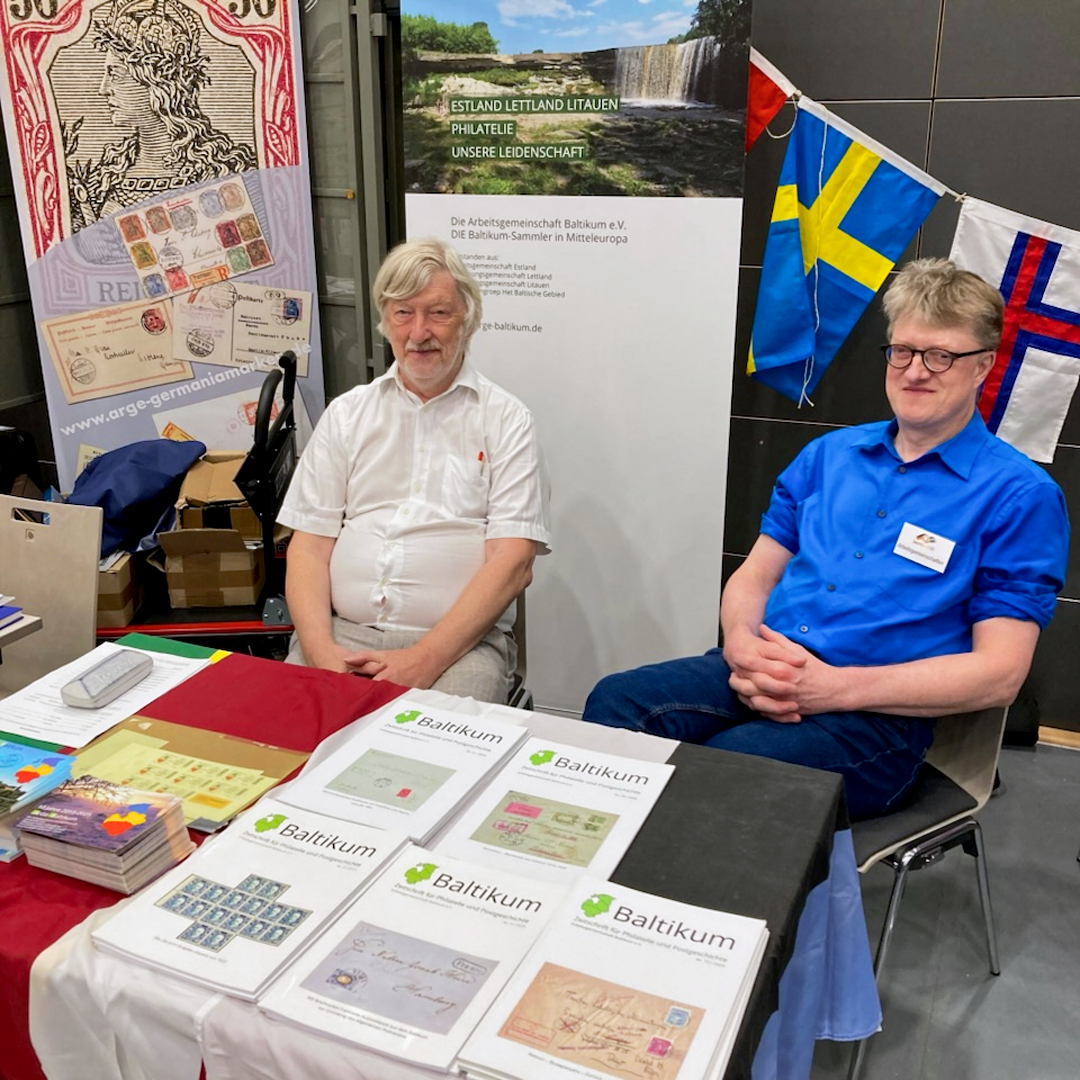
Michael Haslau, Olaf Hoffmann and Torsten Berndt manned the stand over the three days. Thanks to the strong team, everyone was also able to visit the exhibition and browse the traders' stalls. We were even able to offer support to other clubs. The three days in Bernau were well worth it.
← Torsten talks to Wolfgang Maassen
Olaf and Torsten are available to answer enquiries →
↓ A view inside the exhibition hall

Arbeitsgemeinschaft Baltikum e.V.
(Working Group Baltic States)
in the BDPh e.V. (Association of German Philatelists)
Philately of Estonia, Latvia and Lithuania
Association register entry VR 3542 at Siegburg local court
Latest News
- 65. monthly video chat July 4, 2026
- 64. monthly video chat August 1, 2026
- bephila 2026 July 17–19, 2026
Useful Links
Contact
Torsten Berndt, Chairman
+49 (0)89 82079480
Öschlestraße 75,
D-78315 Radolfzell–Böhringen
This e-mail address is protected against spambots! JavaScript must be activated in order to view it.
2015–2026 © ArGe Baltikum | Legal info | Terms of use | Sitemap | Last Update: September 27, 2026